
The new type of mechanical lime shaft kiln has outstanding advantages in automation and energy saving, and is the core equipment for industrial lime production. However, under continuous high-temperature operation conditions, typical problems such as nodules, partial burning, and calcination belt deviation often occur due to the influence of raw materials, operations, and process control, resulting in a decrease in finished product quality, disorder in production conditions, and abnormal equipment operation, which restricts the stable and efficient operation of the production line.
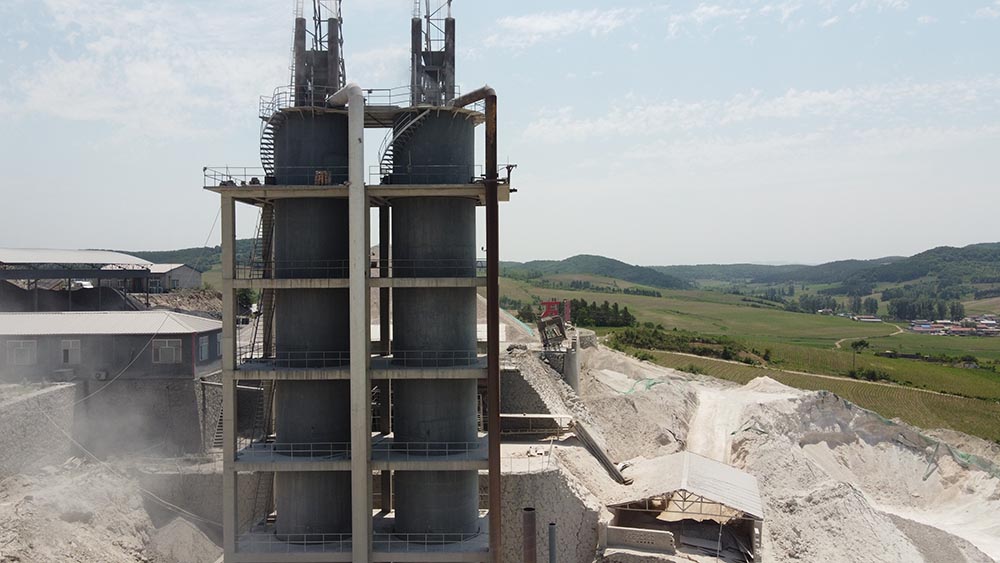
Calcination imbalance is the most frequent core problem, mainly including two types of faults: partial burning and calcination belt deviation. The uneven particle size of limestone and excessive mixing of powder in production can lead to uneven ventilation and material distribution in the kiln, inconsistent heating of materials, and serious partial burning, resulting in insufficient lime activity and excessive hard blocks in the finished product. At the same time, improper control of air volume and pressure, as well as deviation in the fabric system, can directly cause the calcination belt to shift up and down, and the width to be unbalanced, completely breaking the thermal balance inside the kiln and significantly reducing the yield of finished products.
The formation of nodules on the kiln wall is a key malfunction that affects the working conditions inside the kiln. Fine limestone powder rises with high-temperature airflow, melts and adheres in the high-temperature area of the kiln wall, and accumulates and solidifies for a long time to form hard kiln lumps. Kiln nodules can occupy the space inside the kiln, block ventilation channels, hinder the normal descent of materials and the circulation of hot air, thereby exacerbating the burning and disorder of the calcination zone. In severe cases, the detachment of large kiln lumps can cause the unloading mechanism to jam, leading to problems such as edge collapse and material bridging, resulting in production interruption and a significant decrease in production capacity.
Equipment malfunctions can trigger various calcination problems. Blockage, air leakage, and angle deviation in the air supply system can cause uneven oxygen supply and unstable air pressure in the kiln, which are the main causes of offset and partial burning in the calcination zone. The aging and inadequate sealing of the ash unloading sealing equipment can lead to an imbalance of air pressure and disordered heat flow distribution in the kiln, continuously exacerbating the problem of nodules and forming a vicious cycle, increasing equipment energy consumption and the probability of failure.
Environmental protection defects are common production hazards. Unreasonable layout of dust removal system, dust accumulation in pipelines, and aging seals can easily cause dust leakage and substandard exhaust gas treatment. At the same time, the accumulation of dust will indirectly affect the heat dissipation and ventilation of the kiln body, and assist in inducing abnormal calcination. In production, it is necessary to strictly control the particle size of raw materials, accurately regulate the air to material ratio, regularly clean tumors and maintain equipment, avoid various faults from the source, and ensure the stable operation of the kiln body.