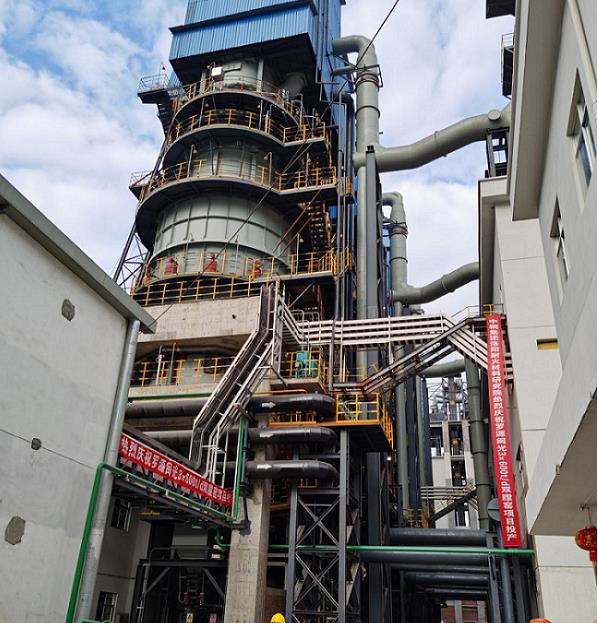
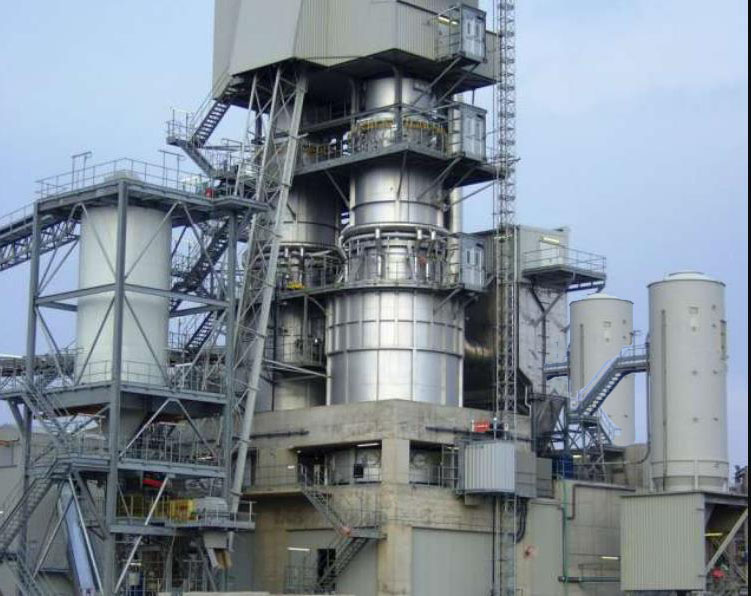
new double chamber lime kiln
The new double chamber lime kiln is one of the main products of Jinyong kiln. The company has invested a lot of manpower and energy in technical research and development.
⚙️ Core Technical Parameters
The new double chamber lime kiln is one of the main products of Jinyong kiln. The company has invested a lot of manpower and energy in technical research and development. Currently, the company has achieved breakthrough progress in the technology of double chamber kiln.
Features of double chamber kiln:
Double chamber kiln is also known as double chamber parallel flow regenerative lime kiln. Xinhua double chamber kiln has the unique function of ultra-low energy consumption and homogeneous calcination of lime. To achieve the above functions, the kiln has a special shape and also has a unique production process. Performance parameters: The Xinhua double chamber kiln actually has two chambers filled with limestone, and there is a connecting passage at the junction of each chamber cooling section and calcination section; The two sketches show the kiln operating alternately during the two cycle cycles, as well as the preheating, combustion, and cooling sections; During cycle 1, combustion air enters the top of kiln chamber 1, combines with the fuel in the combustion zone, flows downward into the channel, and is discharged through the top of kiln chamber 2; The cooling air enters the bottom of each kiln chamber, combines with the gas flow of the combustion gas in the passage, and is discharged through the No. 2 kiln chamber. During cycle 2, the combustion air and fuel enter the No. 2 kiln chamber, flows downward into the passage, and is discharged from the No. 1 kiln chamber. The use and maintenance process principle shown in the sketch in Figure 1 shows that combustion always occurs when combustion air and fuel flow downward. In each kiln, limestone also moves downward, a process called "concurrent flow", which is the first of two characteristics of the kiln. The burning process is completed by a concurrent flow of extremely hot flames in contact with limestone and cooler gas. The raw limestone material at the initial end of the combustion zone cannot be overcombustion, and the heat exchange rate may be high. Near the end of the cooler combustion zone, limestone calcination is completed and uniform lightweight calcination conditions are obtained.
Double chamber kiln structure:
The dual chamber kiln adopts a dual kiln structure, with two kiln bodies serving as main and auxiliary kilns for each other. During the lime calcination process, heat can be transferred and used, improving the utilization rate of heat. From top to bottom, dual chamber kilns are divided into pre heating zone, calcining zone, and cooling zone. The screened qualified stones are transported to the kiln top silo by a winch trolley, and then distributed by a reversible belt on the kiln top to the rotary hoppers in both chambers. Then, the stones are uniformly distributed into the kiln by a rotary distributor. The stones are calcined under positive pressure in the kiln.
Calcination process:
It is assumed that the calcination starts from kiln chamber A, and combustion supporting air enters from the top of kiln chamber A and flows downward under the effect of pressure difference. In the preheating zone, combustion air flows downward and is preheated by hot limestone. Upon reaching the calcination belt, it is mixed with the fuel delivered by the spray gun for combustion. High temperature is generated to decompose the limestone, and the generated lime enters the cooling belt. After being cooled to 60~80 ℃ by the cooling air at the kiln bottom, the lime is discharged into the lower ash hopper through a disc ash extractor. During the descending process, the flue gas generated by the combustion of air and fuel enters the kiln chamber B through the connecting channel in the middle of the kiln chamber. In the kiln chamber B, the flue gas rises from bottom to top, passes through the calcination zone, and reaches the pre tropical zone. In the pre heating zone, the flue gas contacts with limestone for heat exchange, transferring residual heat to the limestone, and the flue gas temperature drops to about 150 ℃ before being discharged from the kiln roof. After the limestone absorbs the residual heat from the flue gas, the temperature rises, accumulating heat, and waiting for the next cycle to preheat the combustion supporting air supplied from the kiln roof.
Construction enterprise:
Due to the relatively complex construction process of the kiln equipment of the double chamber kiln, many enterprises do not have such construction technology. Jinyong kiln has accumulated a lot of technology in the lime kiln industry for 20 years, and currently the double chamber kiln built is at the forefront of the industry. The lime kiln has a long service life and a large output of calcined lime, which has a high activity and is suitable for many industries.
Linyi Jinyong Kiln Co., Ltd. produces dual carbon kiln equipment, designs and builds dual chamber lime kilns. Welcome to contact us for consultation and negotiation.
🏭 Applications & Advantages
Metallurgy
Calcination of active lime, dolomite, magnesite to improve metallurgical performance and reduce impurities.
Cement Industry
Core clinker calcination with co-processing of alternative fuels for energy saving and carbon reduction.
Chemicals & Refractories
Processing bauxite, ceramic proppants, chemical raw materials and fine powders.
Low-Carbon Value
Combined with preheater and cooler, heat consumption can be reduced to <850 kcal/kg clinker, saving thousands of tons of standard coal annually compared to conventional kilns.
📋 Get a Custom Quote
Share your process requirements (capacity, fuel type, material). Our engineers will provide a detailed solution and quotation.
⭐ Free preliminary process design + lifetime technical support